

How Beginners Can Spot River Hazards Before a Tubing Trip
Spotting river hazards might sound like something only seasoned guides can do, but it is a learnable skill. With a little awareness before and during your float, you can relax and enjoy the day instead of worrying about what the water might be hiding around the bend.
This guide covers the simple checks to make before you launch and the common hazards to watch for once you are floating. By the end, you will see why a gentle, beginner friendly river like the Saco is a great place to practice these skills.
Why Spotting Hazards Early Matters
Most river trouble is avoidable when you see it coming. A rock, a low branch, or a stretch of fast current is far easier to handle when you spot it early and steer wide. Reacting calmly from a distance beats scrambling to dodge a surprise at the last second.
That early awareness is exactly what lets beginners relax. Once you know the handful of things worth scanning for, the river stops feeling unpredictable. You can settle into the float, chat with your group, and enjoy the scenery, confident that you will notice anything that needs a small adjustment.
Check Conditions Before You Go
The safest float actually starts before you reach the water. A few minutes of preparation at home tells you whether conditions are friendly that day and what to expect once you launch. Two pre-trip checks matter most for beginners, and both take only moments to complete.
River Levels and Flow
Water levels shift constantly with rain and the changing seasons. High or fast water raises the risk for everyone, while very low water can hide rocks just beneath the surface. As a beginner, favor calm, gentle stretches rather than anything moving quickly or churning.
Checking a conditions report before you leave takes the guesswork out of it. The Saco River conditions page posts live water levels and flow rates, so you can see at a glance whether the river is sitting in a comfortable, beginner friendly range for the day.
Weather and Rainfall
Weather matters even when the sky above you looks clear. Rain falling upstream can speed up the current hours later and miles downstream, so a sunny afternoon does not always mean calm water. Storms or lightning are a firm signal to stay off the river entirely.
Make a habit of checking the forecast the morning of your trip and then glancing at the sky again right before you launch. Mountain weather can turn quickly, and a quick second look helps you avoid being caught out by a fast-moving storm.
Common River Hazards to Watch For
Here is the reassuring part: most rivers share the same small set of hazards. Once you know what they look like, you can scan for them almost automatically. The next sections break down each one so you know exactly what you are watching for on the water.
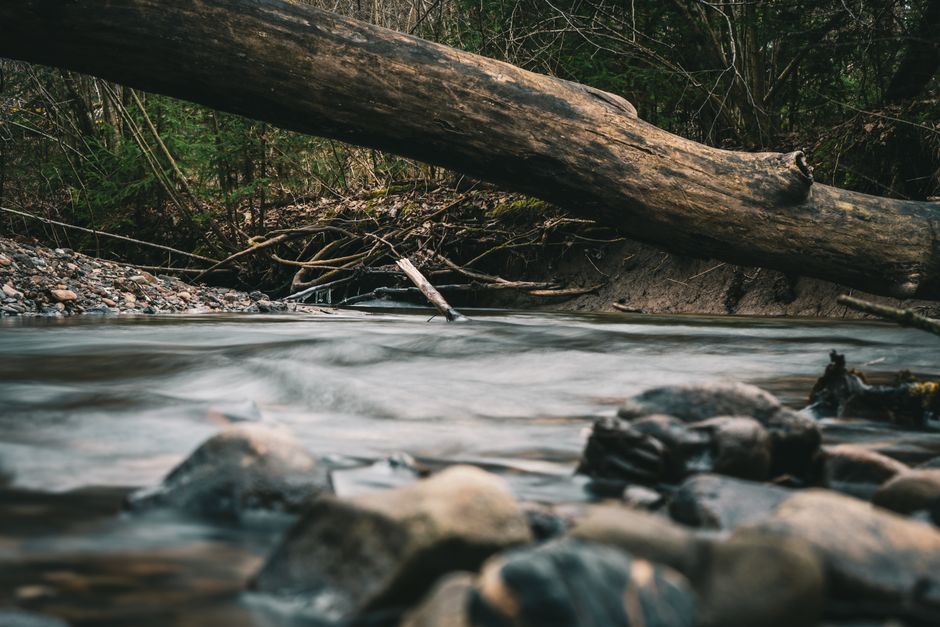
Choppy or rippling water often hints at rocks just below the surface.
Rocks and Shallow Spots
Rocks come in two forms, the ones you can see and the ones lurking just below the surface. Sudden shallow patches catch beginners off guard too. Choppy or rippling water often signals something solid underneath, so treat those textured spots as a cue to steer gently around.
Strainers and Fallen Branches
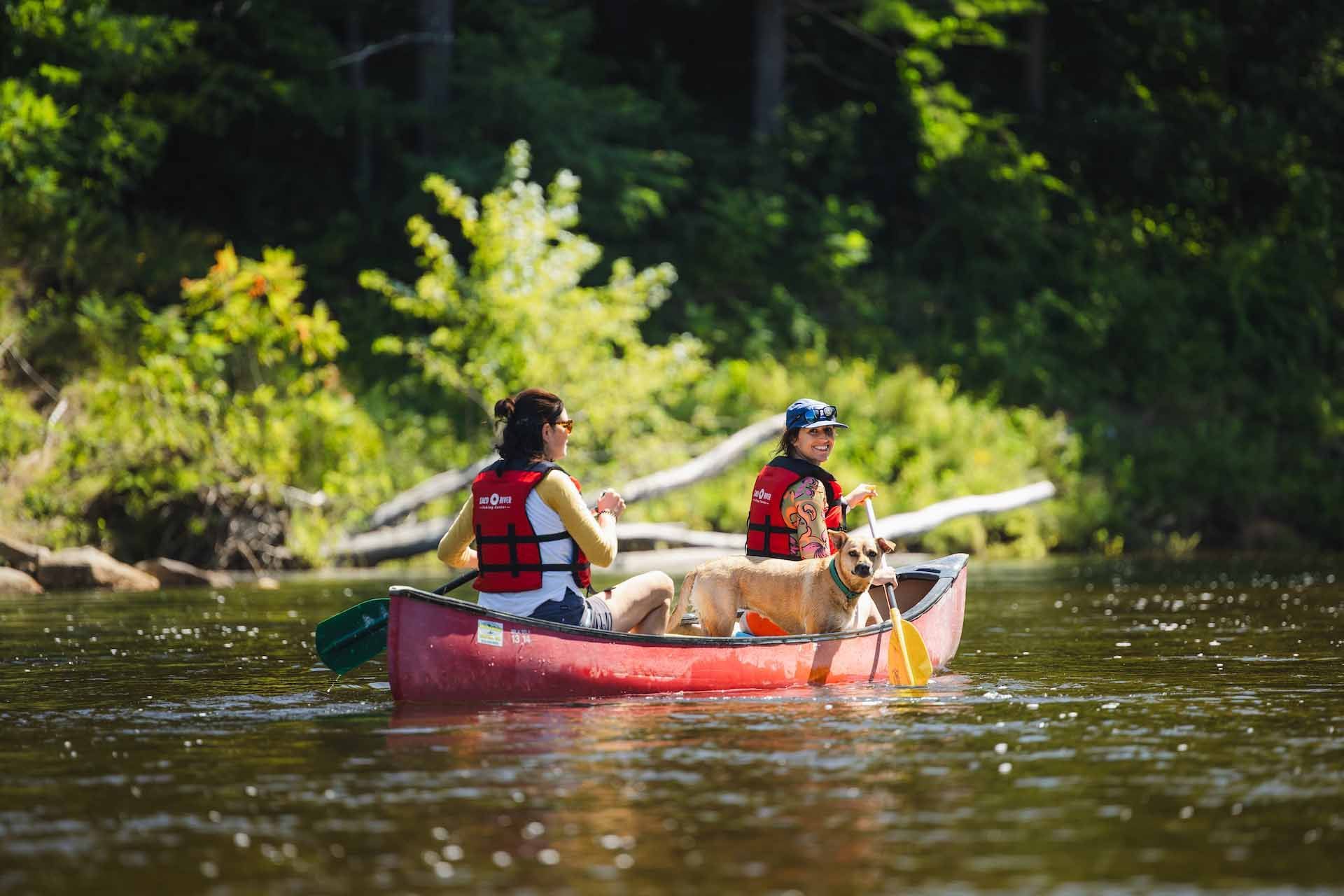
A strainer is anything that lets water pass through but stops a person, like a fallen tree, branches, or a tangle of logs. These rank among the most dangerous river features because the current can pin you against them. Give any strainer a wide, early berth.
Currents and Drop-Offs
Current speed can change suddenly, and drop-offs can shift the depth without warning. Watch for water that looks fast, turbulent, or cluttered with obstacles, and treat those stretches as places to avoid rather than push through. When in doubt, steer toward the calmer, smoother line instead.
How to Read the Water
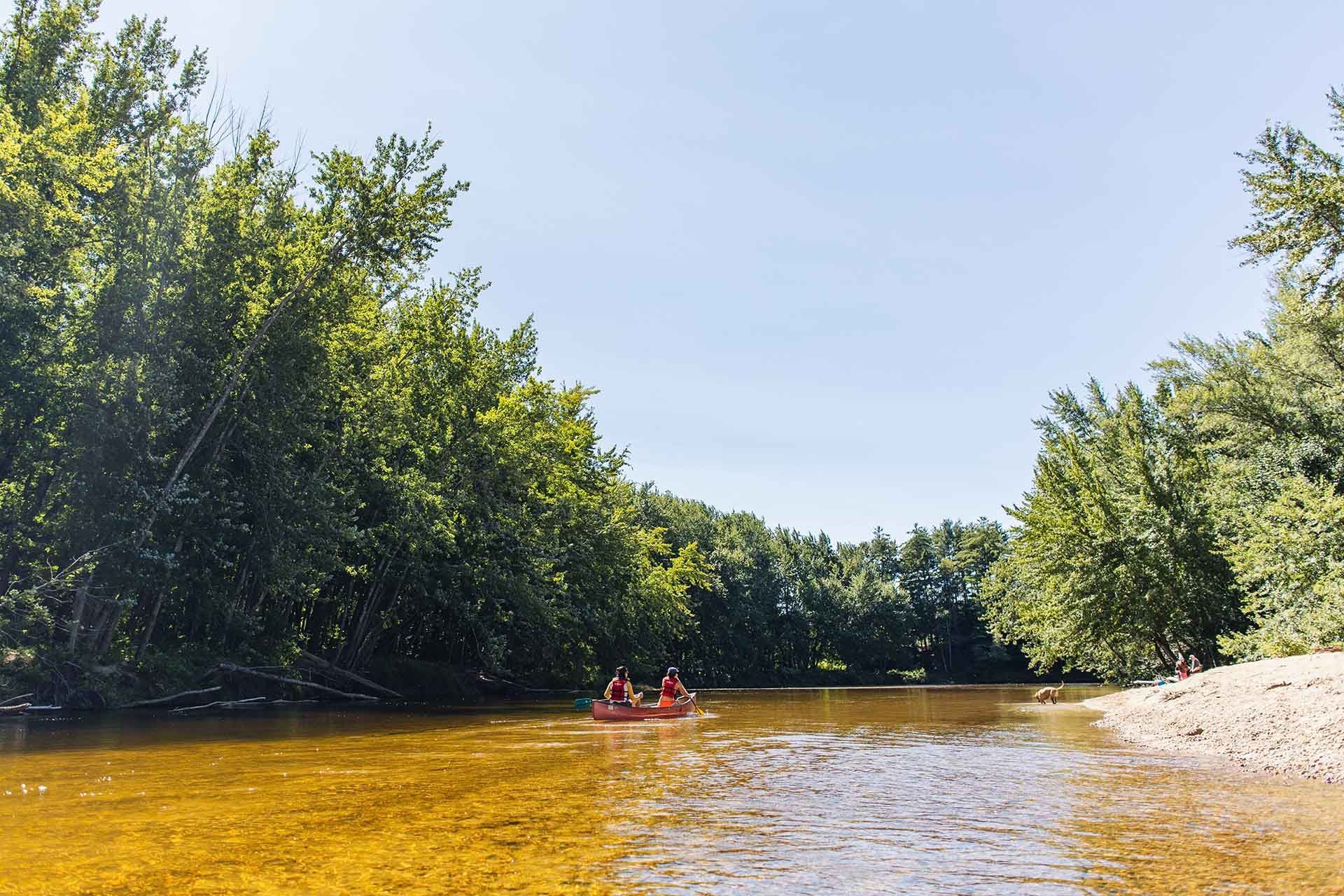
Reading the water is mostly a habit of looking ahead and interpreting what the surface tells you. Smooth, even water is usually clear and safe, while choppy or rippling patches hint at rocks or obstacles below. Scanning downstream gives you time to plan a gentle path.

Scanning downstream gives you time to plan a gentle path.
Steering is simpler than it sounds. Use your hands as paddles and your feet to push gently off the bottom in shallow spots, making small adjustments early. That keeps you in control and lets you ease around hazards long before you reach them, rather than reacting late.
Gear That Keeps You Safer
A few essentials buy you time to react if something goes wrong. Wear a properly fitted life jacket regardless of how well you swim, since it keeps you afloat if you tip out. Water shoes protect your feet on rocky footing, and skipping alcohol keeps your judgment sharp.
These basics work alongside good awareness rather than replacing it. For a fuller rundown, the Saco River tubing safety guide covers gear and preparation in depth, and the emergency procedures guide walks through exactly what to do if you fall off your tube or hit fast water.
Ready to Float the Saco Safely?
Spotting hazards is not about fear, it is about confidence. The Saco is a gentle, beginner friendly river, and knowing how to check conditions and read the water turns an already good day into a relaxed one. These small skills quickly become second nature on calm water.
When you are ready to put them into practice, the friendly team along the Saco is happy to answer questions before you book. Reach out through the Saco River Tubing contact page, and start planning a safe, easygoing first float with total peace of mind.