

What to Look for When You Choose the Right Tent Camping Essentials
The most common camping mistake happens in the store, not at the campsite. Four people buy a four-person tent, then spend the weekend shoulder to shoulder with nowhere to put a single backpack. Capacity numbers describe bodies lying flat, not people living comfortably for two nights.
Choosing well is easier when you take the decisions in order. This camping tent buying guide works through size, weather protection, materials and setup, then the sleeping and camp gear that goes inside, finishing with the river-specific calls for a night beside the Saco.
Why Your Tent Choice Matters
Your tent sets the tone for the entire trip, because sleep quality decides how the next day feels. A group that slept well is up early and floating by ten. A group that slept badly is packing up by lunch and blaming the weather.
Almost nobody regrets a tent because of price. The regrets are space and leaks, a tent too small to sit up in or a floor that wicks water overnight. Knowing what to look for in a tent means reading the specifications before you reach the checkout.
Sizing a Tent for Everyone
Knowing how to choose a tent starts with size, because every other decision adjusts around it. Three checks turn a number on a box into real living space, namely how capacity ratings actually work, how much headroom you get, and how many doors the design gives you.
Capacity Ratings Versus Real Space
A capacity rating assumes everyone sleeps shoulder to shoulder on bare pads, with no bags, no boots and no room to roll over. The working rule is simple. Size up by one person for gear, and by another person again if a dog is coming.
- Two adults: buy a three or four person tent, which leaves room for packs and boots inside.
- Two adults and a dog: buy a four or five person tent for a clear walkway between the pads.
- Two adults and two kids: buy a six person tent so gear stays dry and off the floor.
- Four adults: buy a six or seven person tent so nobody sleeps against a wet wall.
Peak Height and Headroom
Peak height decides whether you sit, kneel or stand, so aim for roughly 60 inches if you want to kneel and dress, or close to 72 inches for standing room. Dome walls also curve inward, which costs usable space that near-vertical cabin walls keep.
Doors, Vestibules, and Storage
Two doors is the feature families notice first, because nobody climbs over a sleeping child for a late-night bathroom trip. Among the best tent features for families, a vestibule runs a close second, giving wet shoes, life jackets and daypacks a covered home off the floor.
Interior storage is the small feature that keeps a tent livable. Wall pockets hold phones, keys and headlamps where you can find them in the dark, and a gear loft overhead clears the floor of everything that would otherwise get stepped on.
Weather Protection That Actually Holds
Weather protection separates a tent you trust from a tent you replace after one bad night. Three things decide it, namely how far the rainfly reaches, what the waterproof rating actually promises, and whether the tent can breathe while it keeps the rain out.
Rainfly Coverage and Seams
A full-coverage rainfly reaches most of the way to the ground and shields the doors, while a roof-only fly leaves the walls exposed in wind-driven rain. Check for sealed or taped seams too, plus a bathtub floor that curves several inches up the sidewalls.
Waterproof Ratings Made Simple
The millimeter figure on a tent is its hydrostatic head, a measure of how tall a column of water the fabric holds before leaking. Floors normally carry a higher rating than the fly, because body weight presses the fabric down into genuinely wet ground.
- 1,000mm to 1,500mm: handles light, short-lived showers, best suited to settled fair-weather weekends.
- 1,500mm to 2,000mm: handles steady summer rain, best suited to most riverside camping.
- 2,000mm to 3,000mm: handles heavy rain driven by wind, best suited to real storms and open sites.
- 3,000mm and above: handles sustained downpours, best suited to shoulder season and high ground.
Ventilation and Condensation Control
A sealed tent is a wet tent, because four people breathing overnight release moisture that condenses on the fly and drips onto sleeping bags. Look for mesh panels, adjustable roof vents and low openings, then leave the vents open so warm air keeps escaping above.
Materials, Poles, and Durability
Polyester is the sensible choice for family camping, since it resists stretching when wet and handles sunlight better than nylon. Nylon is lighter and stronger for its weight, which is why backpacking tents use it, though it sags in rain and fades faster over seasons.
Denier measures yarn thickness, so a 75D floor is tougher than a 40D one, and ripstop weaves add a grid of threads that stops small tears spreading. Poles matter most of all, because fiberglass splinters in wind while aluminum flexes and recovers.
Tent Types and Season Ratings
Four designs cover almost everything on the shelf, and each trades something away. Domes handle wind well but lose headroom at the walls, while cabins give you standing room and catch more wind. Tunnels and pop-ups sit either side of that balance.
- Dome: sheds wind and free-standing, but sloping walls cut usable space. Best for couples and small groups.
- Cabin: vertical walls and standing room, but catches wind and is slower to pitch. Best for families staying several nights.
- Tunnel: the most space for the weight, but needs guying and is not free-standing. Best for long weekends in mixed weather.
- Pop-up: pitches in under a minute, but has thin fabric and is awkward to repack. Best for fair-weather nights only.
Season ratings are simpler than they look. A three-season tent is built for spring, summer and fall, with plenty of mesh and a fly that sheds rain. Four-season tents trade ventilation for snow-load strength, which is more tent than a New England summer needs.
Setup Speed and Packed Size
Color-coded poles and clip systems are worth paying for, since they turn pitching into a job one person can finish in fading light. Treat advertised setup times as optimistic, then pitch the tent once in the backyard before you ever load the car.
Packed size matters far less than backpacking guides suggest, because at a drive-in riverside site you park near the sand and carry gear a short distance. Prioritize space, headroom and weather protection over a small stuff sack you will use twice a summer.
Sleeping Gear That Completes It
A tent is only half the sleeping system. Rate your bag about ten degrees below the coldest night you expect, since New Hampshire summer nights drop into the fifties beside the water even after a hot afternoon out on the river.
The pad matters more than most first-timers expect, because its R-value measures insulation from cold ground that pulls heat out of a bag faster than air does. Our camping packing list covers pads, pillows and the rest of the kit.
Camp Essentials Beyond the Tent
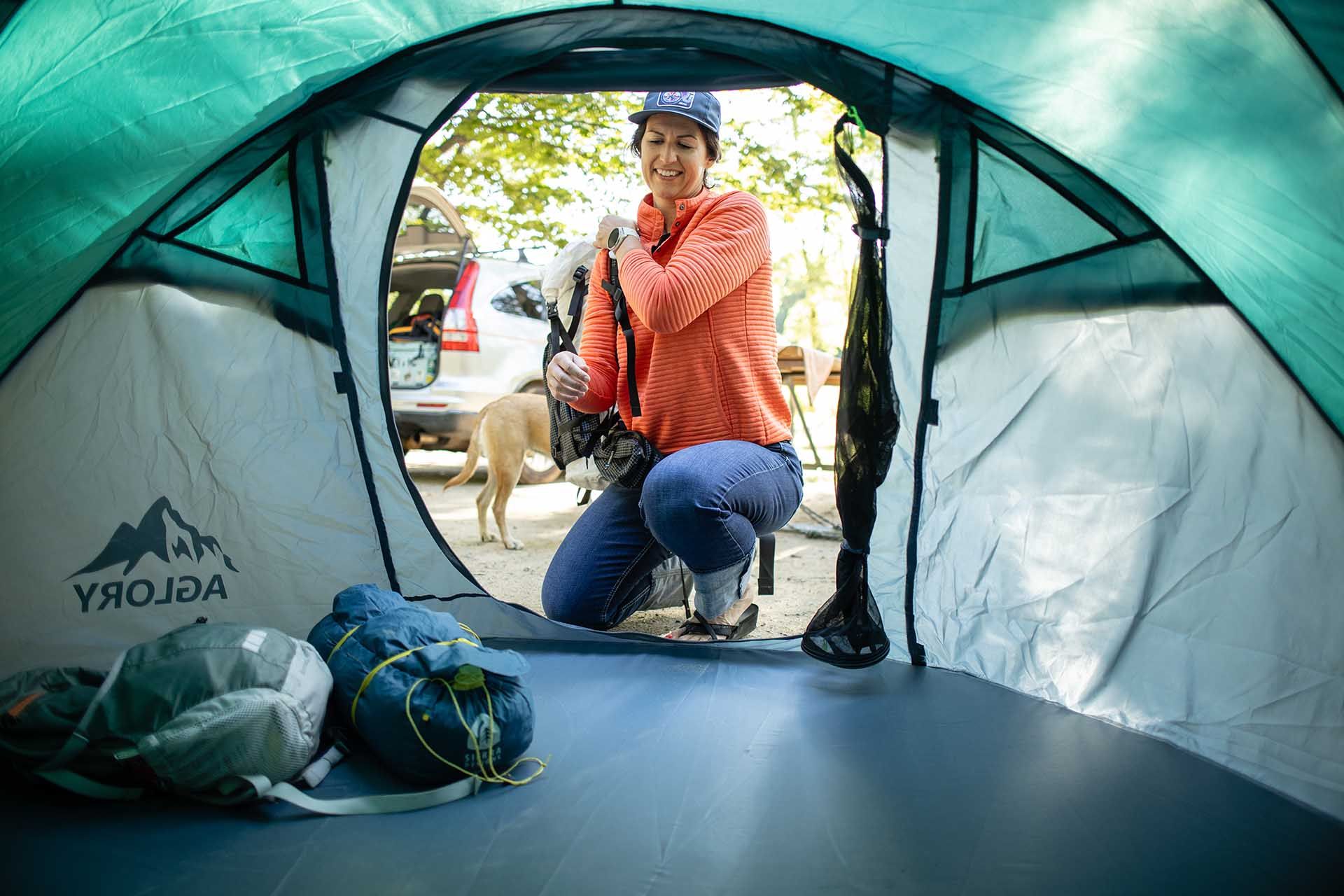
A short tent camping essentials list decides whether the tent performs the way the box promised. Group the items by job when you pack, which is the simplest way to organize camping gear for beginners. The full what to bring checklist covers the river side.
- Under the tent: a footprint cut to size, plus a handful of spare stakes.
- Light: one headlamp per person, a lantern for the shared space, and spare batteries.
- Repairs: a pole splint, fabric patches, seam sealer and a roll of duct tape.
- Safety: a stocked first aid kit, sunscreen and bug spray.
- Dry storage: dry bags for phones and keys, plus a lidded bin to keep valuables off the sand.
- Cleanup: trash bags, because you pack out everything you carry in.
Pitching a Tent Near Water
Riverside sites reward a little extra care. Pitch high and well back from the waterline, because the Saco can rise overnight after rain falls upstream even when the sky above camp stays clear. Sites at the Beach Camping Area come with bathrooms and picnic tables.
Loose sand holds standard stakes poorly, so pack longer stakes or sand anchors and bury them at an angle, with the doors turned away from the prevailing wind. Then dry the tent fully before storage, since packing it damp is how coatings fail and mildew starts.
Ready to Camp Beside the Saco?
Work through the decisions in order and the choice gets easy. Size up by one or two people, insist on a full-coverage fly and aluminum poles, check that the tent can breathe, then add a warm bag and an insulated pad underneath.
The Saco gives that tent somewhere worth pitching, with sandy beaches, shallow clear water and camping a mile from North Conway. Wondering which site or trip length suits your group? Get in touch and we will help you sort both before you pack.