

How to Get Into a Kayak for Beginners Without Tipping Over at All
Almost nobody tips a kayak while paddling. They tip in the first ten seconds, standing in the boat, stepping on the seat, or hauling a leg in before sitting down. Entry is where the nerves live, and the easiest part to fix.
The kayaking tips for beginners that matter most happen before the paddling starts. This guide covers how to get in a kayak from a sandy shore, a dock, or deep water, using a low, slow method that relies on technique rather than balance.
Why Kayaks Feel Tippy at First
A kayak is stable when your weight is low and centered over the keel line, and unstable the second it rises or shifts sideways. Are kayaks easy to tip? Not while you are sitting. They are easy to tip while you are standing.
That is reassuring, because stability turns out to be a technique question rather than a talent question. Nobody needs good balance to sit in a boat. They need three points of contact, slow movement, and no urge to stand up.
Set Up Before You Step In
Three choices decide how easy entry will be, and all happen before anyone touches the water. Where you launch, which style of boat you sit in, and how your gear is packed. Kayak entry techniques work better when the setup is right.
Choosing Calm, Shallow Water
Look for flat water with a gentle sandy entry, ankle to shin deep. Deep enough that the hull floats freely, shallow enough to stand beside comfortably. A grounded kayak is the classic mistake, because sand grips the hull and pivots it sideways.
Sit Inside or Sit On Top
Sit-on-tops are more forgiving for beginners, since you sit higher on an open deck and can climb back on in deep water. Sit-insides sit lower and feel tippier at first. Check the canoe and kayak rental options before you book.
- Easy for a first timer: sit-on-top, yes; sit-inside takes practice.
- Re-entry in deep water: sit-on-top is manageable alone; sit-inside is hard without help.
- Feel when seated: sit-on-top is higher and open; sit-inside is lower and enclosed.
- Best for: sit-on-top suits warm summer paddling; sit-inside suits cool, windy days.
Gear That Makes Entry Easier
Put the life jacket on before you launch, since nobody buckles one while floating. Wear shoes you can get wet, and keep coolers and dry bags low and centered, because weight carried high does most of the tipping. The what to bring list covers everything else.
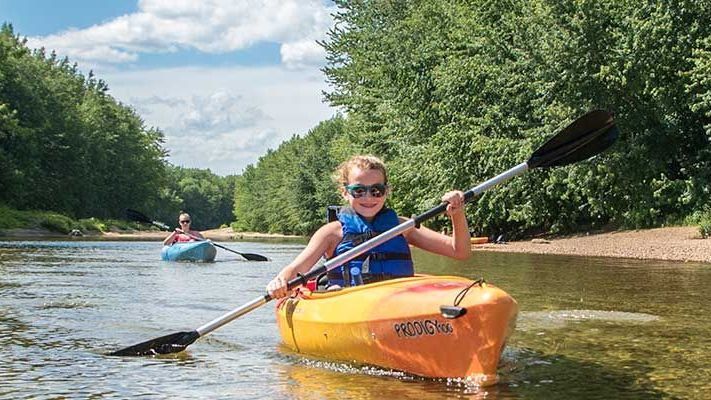
Launching From a Sandy Shore
This is the launch worth practicing, since it covers most beginner trips and most beginner conditions. Learning how to launch a kayak from a beach takes three moves, and once the sequence is familiar it runs about fifteen seconds from standing to seated.
Position the Kayak Correctly
Set the boat parallel to shore in water shallow enough to stand in, floating freely rather than resting on sand. Point the bow the way you intend to travel, usually downstream, so you are not wrestling it around once seated.
Use the Paddle Bridge Trick
Lay the paddle across the boat behind the seat, at ninety degrees to the hull, with the far blade resting on the river bottom. That turns the paddle into an outrigger. Grip the shaft and the cockpit rim together and the rolling stops.
Sit First, Legs Second
Straddle the kayak with one foot on either side, hands holding the paddle shaft and the rim together, then lower into the seat from a squat. Sit down first. Only once you are settled do you lift your legs in, one at a time.
Getting In From a Dock
Docks look easier and are usually harder. Bring the kayak alongside, parallel and touching, then sit on the dock edge with both feet already in the cockpit. One hand goes behind you on the dock, the other behind the kayak seat.
Lower straight down rather than stepping across, then rotate your hips so you land facing forward. Height decides the difficulty here. A low dock sitting a few inches above the water is manageable for anyone, while a high dock is worth walking past.
Climbing In From Deep Water
If you end up swimming, a sit-on-top is recoverable on your own. Reach across the deck and grab the far edge with both hands, then kick your legs hard behind you and pull your chest up while the kick carries your hips over.
Once you are lying flat on the deck, rotate onto your back, swing your legs around, and slide into the seat. It feels awkward the first time, so practice it once in shallow water where standing up is always an option.
Staying Steady Once Seated
Balance in a kayak is mostly about staying loose. The boat is meant to rock underneath you, and fighting that motion is what puts people in the water. These kayak balance tips take a few minutes to learn and last all season.
- Keep your hips loose and let the hull rock beneath you.
- Look ahead down the river, not down at the boat.
- Keep the paddle in the water, where it works as a brace.
- Sit upright rather than leaning back into the seat.
- Store gear low and centered, never on your lap.
Strokes reinforce all of this, because a paddle moving through the water stabilizes as well as propels, and most beginners feel steadier the moment they start moving. The guide on how to paddle a kayak covers the four strokes worth knowing.
Getting Out Without Falling
Exiting is entry in reverse, and the same rules apply. Paddle into shallow water, bridge the paddle behind the seat again, bring your knees in toward your chest, and swing your feet out onto the riverbed one at a time before rising.
Then stand slowly from a low crouch. Most late day dunkings happen right here, when tired legs push up fast and the hull slides out from underneath. Keep a hand on the paddle bridge until you are fully upright and steady.
Mistakes That Cause Tipping
The same handful of errors account for nearly every beginner capsize, and each one involves height or haste. Reading them once is enough, since they are easy to avoid deliberately and just as easy to repeat when everyone is keen to go.
- Standing up in the boat for any reason at all.
- Stepping on the seat or the side instead of the center line.
- Entering a kayak that is still beached on sand.
- Clinging to the dock instead of committing your weight.
- Putting your legs in before your body is seated.
Ready to Paddle the Saco?
Entry is a sequence rather than a skill. Low and slow, three points of contact, sit before legs, and a paddle bridge whenever you want extra support. Get those right and the tippy feeling disappears within the first ten minutes of paddling.
The Saco averages about three feet deep and launches from a private sandy beach, with life jackets included, so it is a forgiving place to learn. Wondering which trip length suits a first timer? Get in touch and we will point you to it.